

Years Are for Counting –
Seasons for Excitement and Discovery –
And New Music Is Meant to Be Heard!
DREAM, FAITH, TRUTH, and LOVE — four powerful words marked the beginning of a significant and indispensable journey in the musical life of Croatia. It began nearly a quarter-century ago, in the early days of the new millennium, under the auspices of the Music Biennale Zagreb 2001. That journey began with a modest series of four concerts, entitled Word and Music, at the Mimara Museum, launching an entirely new ensemble dedicated to contemporary music.
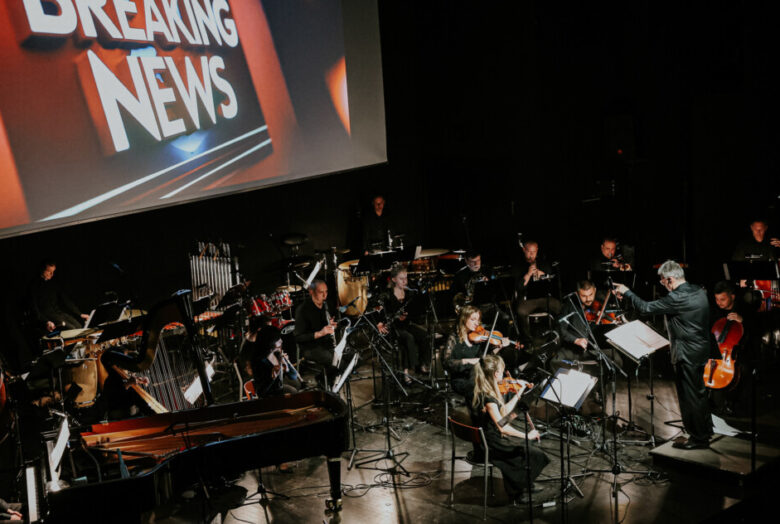
Over the course of those first concerts conducted by Berislav Šipuš, Saša Britvić, Mladen Tarbuk, and Edo Mičić, a new ensemble took shape. It began with the Zagreb Wind Quintet and gradually expanded with a string quintet and additional musicians. Thus, the ensemble named Cantus, referring to the act of singing, was born, eventually evolving into a collective renowned for thoughtfully curated seasons, guest appearances, recordings, commissions, collaborations, and international exchange. Today, with eager anticipation, the ensemble announces its Year of Celebration.
Looking Back and Moving Forward
In a conversation with artistic director Berislav Šipuš and principal conductor Ivan Josip Skender, we reflected on the past season and looked ahead to the next one, which will mark 25 years of Cantus Ensemble. The past season included important international appearances, premieres of new works, and participation in the Music Biennale Zagreb, all while maintaining a strong commitment to Croatian composers.
Canadian Tour
The ensemble’s international engagements underscored its focus on Croatian repertoire, especially works commissioned for the ensemble. A highlight was the October 2024 tour of Canada, a fruitful collaboration with Turning Point Ensemble (Vancouver). The exchange included concerts where Cantus Ensemble premiered Like a Bird With Its Wings Half Furled by young Canadian composer stationed in Vancouver, Ramsey Sadaka, a poetically titled piece that will also be performed in Zagreb.
The wings of Cantus Ensemble are fully spread in a flight (to remain in the poetic atmosphere) showcasing 18 scores by Croatian composers in four Canadian concerts. In Vancouver, the concerts (titled Double Bill) opened Turning Point’s season and featured works by Milko Kelemen, Tibor Szirovicze, Mladen Tarbuk, Ivana Kiš, Frano Đurović, and Vjekoslav Nježić. Subsequent performances included music by Srđan Dedić, Helena Skljarov, Krešimir Seletković, Ante Knešaurek, and Olja Jelaska, blending new commissions with earlier works.
In Toronto, the program featured Boris Papandopulo, new works by Sara Jakopović and David Batinić, and Tan Hetti, a composition by the artistic director and conductor of the Canada concerts, Berislav Šipuš. In Cobourg, the ensemble performed works by Natko Devčić, Ivan Josip Skender, Srećko Bradić, and Michael Pepa (Second String Quartet), alongside Papandopulo’s Chamber Symphony (which has been a staple for the Ensemble for years).
A Commitment to Young Artists
“Maintaining a rehearsed ensemble is crucial,” Šipuš emphasized. “Due to lineup changes, some pieces had to be relearned. Still, in just a week of rehearsals, we achieved a professional and passionate level of performance. We’re fortunate to have young musicians eager to work in this ensemble; they appreciate the atmosphere and the repertoire.”, Berislav Šipuš explains.
The ensemble highlighted young composers at the start of the season. Juraj Marko Žerovnik composed the acclaimed Nexus (a piano concerto), while Alan Kljajić offered the conceptually rich Simulakrum. This concert also offered works by Tibor Szirovicze, Sara Jakopović, and David Batinić, which traveled to Canada with the ensemble.
Italian Tour and Collaborations
The ensemble’s international scope included a collaboration with Icarus Ensemble (Italy), culminating in a December mini-tour. Cantus Ensemble performed Fabio Cifariello Ciardi’s Voci vicine 2.0—a passion for journalist, video, ensemble, and electronics in Zagreb and across Italy, including Reggio Emilia, Cividale, Bologna, and Rome, where the performance was recorded for RAI 5. The project was a co-production with Mittelfest, Nuova Consonanza, and the two ensembles.
“We have opened a further international channel toward Spain. First by featuring the composer and conductor Fabian Panisello in CA season, who introduced himself as a composer alongside a program of contemporary music by prominent Spanish composers. In 2026/2027, Cantus will collaborate with Panisello’s Ensemble Pluriel (Spain). The plan includes a reciprocal exchange, culminating in Cantus’s tour to Madrid in 2027/2028. Similar collaborations have already proven to be successful with the ensembles Icarus (Reggio Emilia), Turning Point (Vancouver), Les Amis (Toronto) and Zeitfluss (Graz). Furthermore, we are working on renewing the ties with the Arnold Schönberg Centre in Vienna, a regular collaborator of Cantus Ansambl in the past.
A New Programming Committee
A new development is the establishment of Cantus Ensemble is a Programming Committee, comprising Šipuš, Skender, composer-musicologist Helena Skljarov, composer-pianist Juraj Marko Žerovnik (of Serious Ensemble Zagreb, focusing on the newest music exclusively), and clarinetist Danijel Martinović, a founding member.
“Danijel is, alongside Bank Harkay and myself the only “survivor” from the very beguining.”, says Šipuš.
In 2026, the ensemble plans twelve unique programs with no repeats (!!), featuring 50 compositions.
“This year, 2025, it was important to perform at the Music Biennale Zagreb as well,” Skender emphasizes, “because it is the festival from which the ensemble emerged, and it will be part of its program again in two years. At the end of the season, under the title AND TO END WITH, my Concerto for Saxophone was successfully premiered, with Nikola Fabijanić as the soloist. That concert also featured the performance of the talented young saxophonist Danylo Dobish, whom I met at the Josip Nochta competition, where he won first prize. Alongside him, we presented a French piece by Jean-Denis Michat, his professor at the Paris Conservatory — a kind of showpiece rich in extended techniques. As for my concerto, it was Nikola Fabijanić who inspired me to write the piece, and I suggested it be with the Cantus Ensemble, since they specialize in contemporary music.”
More New Works for Cantus Ensemble
How are commissions for new works made? Šipuš explains: “We keep track of which of our composers haven’t written for the ensemble in a while, so we invite them to write, and also those who never have. We are especially open to young composers, and we can say that we have performed new works commissioned from almost every composer of the new generation. In May next year, we are planning a special concert that will be the result of a call for young composers – that’s something new. This call was developed by our Programming Board and will be announced soon, allowing composers under 35 years of age to submit their new works, and even works that have already been performed. We will not limit the call only to those with academic degrees in composition or current composition students. That concert will also mark the end of the new season in May and will be conducted by Maestro Skender.
In addition to this concert, we have commissioned new works from Croatian composers: Danijel Legina (for the concert at the 51st Osor Musical Evenings), and a premiere of a work by Krešimir Seletković (which remained unperformed from this year’s Biennale schedule), and for a special concert – a work by Davor Vincze (for ensemble and electronics) that will highlight a connection with Sweden. We will also have two world premieres by foreign composers: Swedish composer and trombonist Ivo Nilsson returns to the ensemble for a concert in March marking the 20th anniversary of the Musical Links project. I’ve also “pushed” myself to write a Trombone Concerto for Nilsson and the ensemble, which will premiere in Stockholm, also in March, at their festival.”
Looking Back and Ahead
Balancing programs that often include non-contemporary music is explained by Skender: “We like to look back, to include composers born 100 years ago or even earlier. For example, we enjoy playing Boulez; we performed his works even while he was still alive, and just recently, we played his Dérive 1 in the final concert of the season. New music from the 20th and 21st centuries should be presented to our audiences as a kind of essential reading – looking, say, 150 years back.
Encouraging young composers is important – we’ve followed some since their student days and gladly perform their works
We also aim to balance the ratio of Croatian and international composers in our programs, though at guest appearances abroad we perform almost exclusively Croatian works. Encouraging young composers is crucial – some we’ve followed since their student days, and we’re happy to perform works like those by Sara Jakopović, who has already written three pieces for us; the ensemble embraced the works and it turned out we made the right choice. As for the Music Academy and the ASMANGU ensemble, it remains the young Cantus, which I’ve now taken over from Berislav. I’m striving to make participation in the ensemble mandatory rather than elective – that way, we can work more intensively and with higher quality.”
Recordings
Concerts during the ensemble’s season, at important festivals, and guest appearances have always been a kind of priority, and while all concerts in the Cantus Ensemble’s season are recorded, the Programming Board decided that, for the ensemble’s 25th anniversary, studio recordings will be undertaken for a double CD. Ten years ago, for the 15th anniversary, the Cantus live(s)! triple CD was released, featuring live recordings of performances by Croatian and selected international composers. This new double album will present exclusively Croatian works in various ensemble formations – from small to full large chamber ensemble. Alongside the selection of works for the CD, there’s also an idea for a publication to accompany a quarter-century of the ensemble’s activity, certainly with a detailed list of concerts and composers performed, complementing the festive concert in December 2026.
Autumn 2025
The new season, actually the 20th since such concert planning began, starts in October with a guest appearance by the Polish ensemble Hashtag Lab, with conductor Liliana Krych, and a Polish program featuring Croatian composer Margareta Ferek-Petrić on October 13. Just days later, on October 18, the Cantus Ensemble travels to Warsaw to perform exclusively Croatian works and a new piece by Dubravko Palanović, as well as a joint performance with Hashtag Lab Ensemble of a piece by Polish composer Żaneta Rydzewska. This opens up collaboration with Poland, and in 2027, cooperation with the Warsaw Autumn Festival is planned, with ongoing contact with Poland.
Before that, the Cantus Ensemble will perform on September 28 in the (anniversary) 50th edition of the Samobor Music Autumn, featuring the winner of their 14th international New Note competition, along with an all-star program of works by Croatian composers written for the winners of the Ferdo Livadić competition, including Cantus Ensemble. These are 4 Estancias for accordion and ensemble by Mladen Tarbuk, Morning at Sea for violin and ensemble by Olja Jelaska, Koha për kangë for guitar and ensemble by Vjekoslav Nježić, and Spiritus ludens, quasi concertino for piano and ten instruments by Zoran Juranić. The soloists will be award-winning musicians Ivan Šverko, Matej Mijalić, Petrit Çeku, and Ivan Vihor, with Berislav Šipuš conducting.
Then, on October 7, the Cantus Ensemble participates in a concert dedicated to composer Srđan Dedić, celebrating his 60th birthday, with a performance of his Self-Fulfilling Prophecies (also featured on his author CD). Composer anniversaries will also be celebrated at the ensemble’s second season concert titled Tant d’Anniversaires! on November 24: from Ravel’s 150th, Scelsi’s 120th, Boulez and Berio’s 100th, to Pascal Dusapin’s 70th with his Violin Concerto featuring soloist Irvine Arditti, and finally, the 50th of Mauro Lanza (a guest at this year’s MBZ).
A Year of Celebration
The year of celebration begins with a concert on February 2, 2026, appropriately titled The Beginning. A program of all-Croatian music includes Descent to the Summit by Stanko Horvat and Memorie by Frano Parać featuring soprano Martina Gojčeta Silić, Litaniae Sanctorum pro Papa Ioanne Paulo by Ruben Radica, Concerto for Flute and Ensemble by Srećko Bradić with soloist Ana Batinica (a member of the Cantus Ensemble), and the premiere of Lorem Ipsum for bass and ensemble by Krešimir Seletković with soloist Marko Špehar. The program will also feature I ritorni by Sanda Majurec, while “Srđan Dedić can actually choose which of the two compositions he wrote for Cantus he’d like us to perform,” explained Skender, who will conduct this special concert.
March brings the aforementioned concert connecting to Sweden, commemorating the project Aged 20 Years. “Sweden had a project in 2006 with European countries called Musical Links; although we were not an EU member, they invited us and we had four concerts with soloist Ratko Vojtek. With this, we want to remember that project, and trombonist and composer Ivo Nilsson will be here in March 2025 as both soloist and composer with a new piece. Then, in Stockholm, we will perform a Croatian-Swedish program at their spring festival Svensk Musikvår,” explains Šipuš. The Zagreb concert under his baton will feature works by Karen Rehnquist, Kent Olofsson, Jacob Mühlrad, and premieres by Davor Vincze and Ivo Nilsson, along with Solo by Helena Skljarov.
Fostering Friendships
The friendship with Italian musicians and composers is the theme of the April concert, which will host flutist Roberto Fabbriciani and young award-winning violinist Sara Mazzarotto. Together with our soprano Darija Auguštan, they will perform works by Giacomo Manzoni, Cesare Valentini, Niccolò Sani, and Rocco Abate, as well as two world premieres – one by Giampaolo Coral, written for Cantus Ensemble but not yet performed (the composer, sadly, has passed away), and a Violin Concerto by young Italian composer Gaia Aloisi (who participated in last year’s MBZ workshop). Also to be repeated is Sicut by Italian composer and musicologist Marcello Filotei, which Cantus Ensemble premiered during their special concert in Rome on October 10, 2024, alongside works by Olja Jelaska, Sara Jakopović, Boris Papandopulo, and Berislav Šipuš, on the occasion of Croatian Parliament Day at the Palladium Theatre in Rome.
The year of festivities in the upcoming 2026/2027 season again brings the Icarus Ensemble (October 2026), while the November concert will be dedicated to female composers working abroad, under the title Immigrant(s) Songs… She Wrote. Paraphrasing the famous crime series, the focus turns to our successful female composers abroad, who may also find time to write a new piece for Cantus. Ivana Kiš and Mirela Ivičević have previously collaborated with the ensemble, while for this concert Sara Glojnarić, Veronika Reutz-Drobnić, and Margareta Ferek-Petrić have also been invited. The conductor for this concert is yet to be decided. In the overall season planning, three concerts will be led by Artistic Director Šipuš, two by Principal Conductor Skender, and one concert will be open to guest conductors, either from international collaborations or exchanges, or as an opportunity for young Croatian conductors such as Mia Đogić and Stjepan Vuger.
Finale of the Celebration
The conclusion of the celebratory year in the prestigious Lisinski Saturdays series will present a program titled Room with a View, featuring the premiere of a new work by Tomislav Oliver (for video, electronics, and ensemble), Calmo by Luciano Berio with soloist Ivana Srbljan, Composé by Milko Kelemen for two pianos and orchestra with LP Duo, and with Radovan Vlatković, Concerto for Horn and Orchestra by Krzysztof Penderecki.
“On the stage of the Great Hall of the Vatroslav Lisinski Concert Hall, there will be 65 musicians of all generations of the ensemble from the past 25 years: all current and former members. Once again, we will celebrate the successful years of activity with a major concert event. It’s important to say that without the support of the Croatian Composers’ Society – both logistical and financial – such activity would not be possible. Therefore, we also have a certain obligation toward Croatian composers, both those who are already members of HDS and those whom we help through performances to achieve the credentials needed for membership in the professional association.
And always, just as from the very beginning, the ensemble presents the new and the newest, but in a way, we are also a museum
And always, just as from the very beginning, the ensemble presents the new and the newest, but in a way, we are also a museum (hence Berio and Penderecki), because through this we acquaint both musicians and audiences with the key scores of our time, and even with those just slightly older. We always strive to balance all these directions in our programming – and that’s how it will remain,” concludes Berislav Šipuš, eagerly anticipating the major events of the anniversary season and year.
The article by Iva Lovrec Štefanović transcibed and translated from the portal glazba.hr
Photo: Matej Grgić
related news from Cantus Ensemble
You might be interested in...
URL je kopiran u međuspremnik