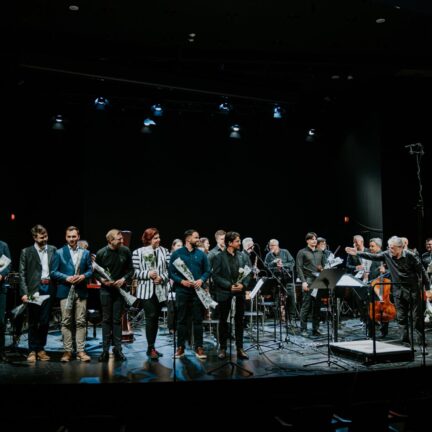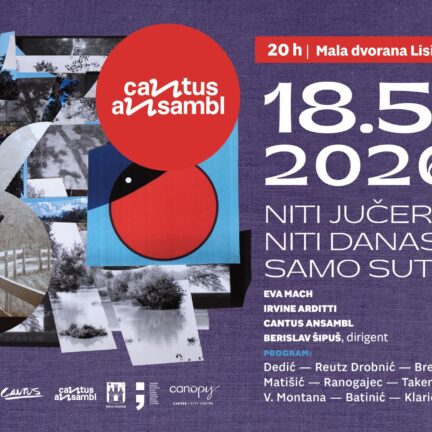
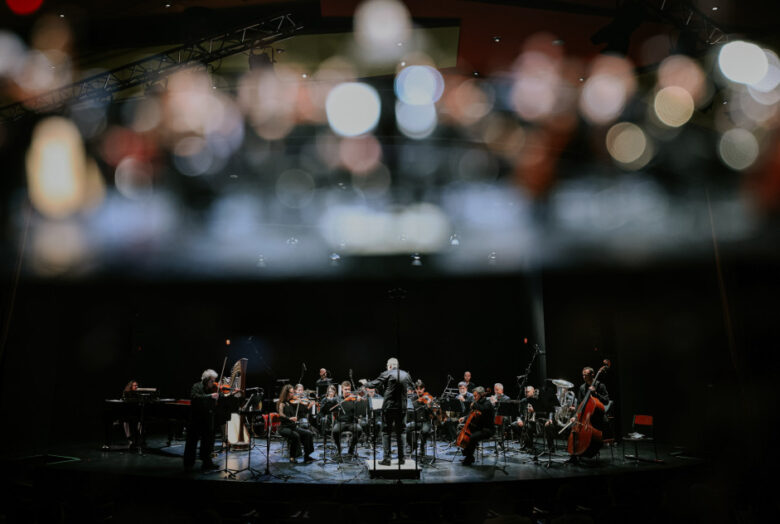
The program at the end of the concert season that celebrated the Cantus Ensemble's quarter-century anniversary was intense, diverse and varied – neither yesterday, nor today, but only tomorrow, was the title of the schedule designed to present the youngest generation of Croatian composers and their works after they passed a specially designed competition for the occasion.
Neither yesterday, nor today – only tomorrow, the title of the concert is like a kind of proclamation calling for progress, or directing the focus to the future. And the future, as we know, is created by young, younger and youngest authors, and even performers.
A special competition in which those under the age of 35 were invited to submit their works from the recent five-year period, or to send a proposal for a new work that they would write specifically for the Cantus Ensemble. The competition in which the committee decided on the selection of works provided the ensemble with six new scores, in order of author names as follows (in order of concert schedule): Šimun Matišić, David Batinić, Krešimir Klarić, Lukša Vučić Montana, Matko Brekalo and Tihomir Ranogajec, while Veronika Reutz Drobnić submitted one recent composition for this occasion.
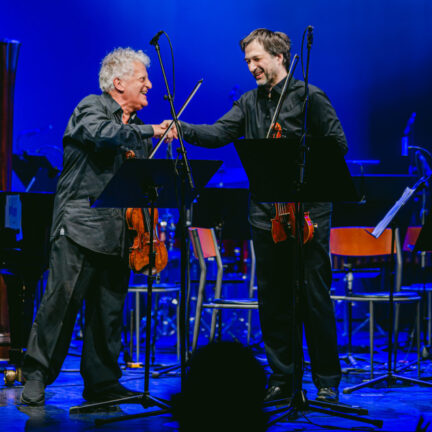
In his opening remarks, the artistic director of the Cantus Ensemble, Berislav Šipuš, warned that the ensemble was in a special celebratory year, marking a quarter of a century, and that in the season that the concert ended, a special guest as the ensemble's concert master and soloist was the legendary violinist, a wizard of contemporary music interpretation, Irvine Arditti. With a smile on his face, Arditti immediately started the concert schedule with a brisk and enthusiastic (night, according to the title) solo performance in the premiere of another new work at the concert, a work that was created in dedication to the musician, and composed by Srđan Dedić (1965), last year's anniversary performer who, with this intriguing composition inspired by the "cosmic energy of the night", continued a successful series of solo compositions that have been recently created.
The series of premieres of young authors was opened by a composition by Šimun Matišić (1996), which in the title Thalia, Calliope and Terpsichore read Sappho reveals the work's dedication to the ancient Greek principles of drama, poetry and dance, continuing (after the premiere of the string quartet Fragment 21 last year) the so-called Sappho trilogy in the medium of chamber sound. The prominent oboe of Dunja Čolić certainly led the work in the dramatic plot of Matišić's reading of ancient Greek poetry, the very collected atmosphere of an interesting chamber ensemble with a string trio, percussion, flute and harp.
A completely different atmosphere of immersion in traditional music was brought by the (already well-known) composition Three Thoughts on Folk Music by Veronika Reutz Drobnić (1999), which the Synchronos ensemble premiered in Croatia at last year's Music Forum in Osijek. Three reflections in three parts with three quotes of traditional motifs from different regions of Croatia present Reutz-Drobnić as a playful author of often witty solutions, in which the engagement of the Cantus Ensemble members was very effective.
The author, who already has multiple experiences in collaborations with the Cantus Ensemble, David Batinić (1996), for this occasion opened up the world of dreams, or rather the perception of the real and the dreamy, in a work whose Latin title refers to the theme Topografia Somnii. An interesting texture that moves from mystical fields to exuberance and debauchery, just as dreams offer as experiences, and the intensity of the experience it evokes in this composition also drew the ensemble into an engaged performance.
Krešimir Klarić (1994), another student of Šipuš in the program (like Batinić) also with multiple experiences of writing for the Cantus Ensemble, was encouraged to write a violin concerto for this occasion, specifically for soloist Irvine Arditti – an opportunity that is not to be missed, but rather considered as a major step forward in taking responsibility for a massive project. Dissensio for violin and ensemble in three-movement form rounded off the first part of the concert, and the challenge of composing for such an exceptional soloist pulled Klarić into the realm of bold solutions, giving this twenty-minute piece the stamp of an encounter with a legend of contemporary music.
And the legend also entered the program in a composition by Toru Takemitsu (1930-1996), the great Japanese magician of modernity who created a unique four-movement journey into the center of silence for two violins, moments that promote the Japanese concept of ma, a peculiar encounter with American and Japanese poetry that were presented to the audience in harmony with the performance at the beginning of the second part by Irvine Arditti and our young, brilliant Eva Mach. Rocking Mirror Daybreak is the title of the work that may have been heard for the first time in Croatia, and it certainly contributed to the framework for a group portrait of young people, just like the introductory premiere of the composition by Srđan Dedić.
After "Dawn by the Swinging Mirror", it was not at all unusual to enter the space of a new project by Lukša V. Montana (2000), a young composer from Split who has already confirmed himself with some interesting awards and successes, and his project brought both an electronic and a video section to the program sequence, continuing its exploration begun with the composition Ad imum for saxophone quartet, electronics and video (a work that was shortlisted for the Josip Štolcer Slavenski Award). The latest work in the series, the second for now, SENKŌ, refers to a flash and explores the idea of a moment and a look upwards (as the composer explained in a short poetic form in the program note). Vučić's now recognizable style, which also artistically uses the surname Montana, shows in this composition a development towards new experiences of amalgamating styles.
The concert was rounded off by two compositions by two composers from Osijek – Matko Brekalo (1993) and Tihomir Ranogajec (1990). They entered the contemporary music scene in our country thanks to a scholarship from the Rudolf and Margita Matz Fund of the Croatian Composers' Society, and have successfully performed at contemporary music festivals in Croatia and abroad, but this was their first opportunity to collaborate with the Cantus Ensemble. Brekalo played with concepts, as he had done, for example, in a composition for the Zagreb Philharmonic Orchestra that brought “intuitive imaginations”, now with the concept of the paradox of fractality, or the English title of the work Fractality Paradox. He used almost all the instrumentation offered by the Cantus Ensemble as a possibility, shaping an interesting dramaturgical flow of impressive short episodes of individual instruments.
The conclusion of this special evening was brought by Tihomir Ranogajec, the oldest of the young composers, who, in turn, made full use of the ensemble in his performance, preparing (as we learned) for some larger projects that include an orchestra. Like all the works in the program, it was given a catchy title, referring to the literal last song of a bird in Hawaii. The Last Birdsong ambitiously captures the ensemble’s capabilities in a wide array of sounds, telling the moving story of a bird that was officially declared extinct in 2000. Thus, a field recording of the Moho braccatus bird (as we learn in the composer’s note) finds its echo in the composition, which leads the song through different sections, transforming it into memorable motifs, to which the composer likens “a multitude of small destinies.”
The excellent idea of the new program management of the Cantus Ensemble, or rather its board which was the commission for the invitational competition, consisting of: Berislav Šipuš, Ivan Josip Skender, Danijel Martinović, Helena Skljarov and Juraj Marko Žerovnik – paved the way for new music by composers with whom the ensemble has already collaborated, but also for new collaborations with young musicians for whom such opportunities and incentives provide an important entry into concert life and valuable experience. Overall, such a “group portrait” can be followed from the auditorium as an excellent insight into the generational grid of ideas, possibilities and reach. And what we want from new compositions are also new performances.
Text by Iva Lovrec Štefanović is transferred from the portal Glazba.hr
Photo: Matej Grgić
related news from Cantus Ensemble